LLM-Mediated Human–AI Interaction in Search and Rescue:
Impact of Expertise on Attentional Allocation
Human performance, visual attention, and expertise under LLM guidance
2026-10-05
Human–AI Setting in Critical Situation
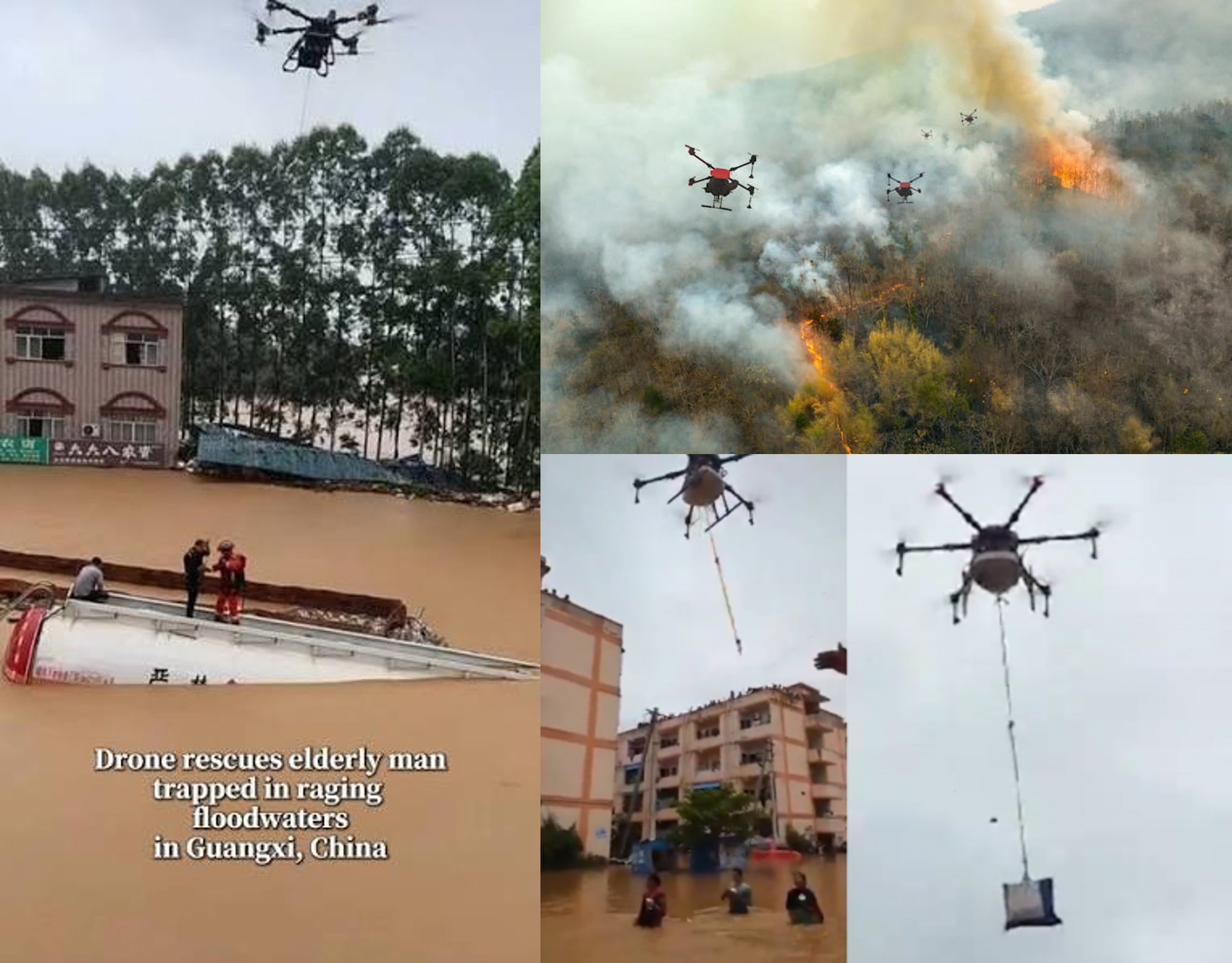
Operators must locate and recover people while conditions change quickly.
- Missions occur in challenging environments
- Decisions must be made under time pressure
- Need to quickly process high volumes of information from multiple sources and translate it into commands that are clear and understandable for humans 1
- LLMs provide natural-language guidance
Research Questions and Contribution
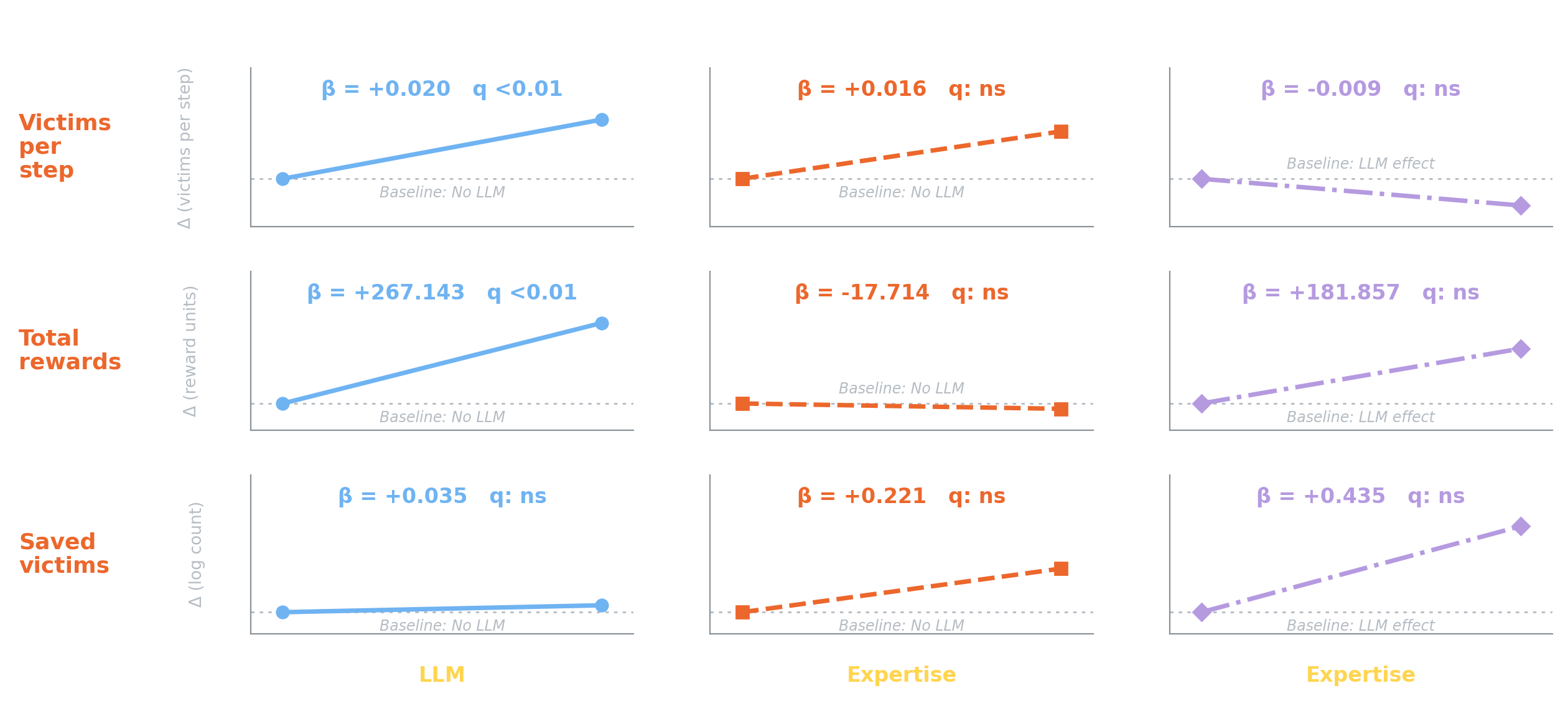
- Performance: Does LLM guidance improve task outcomes?
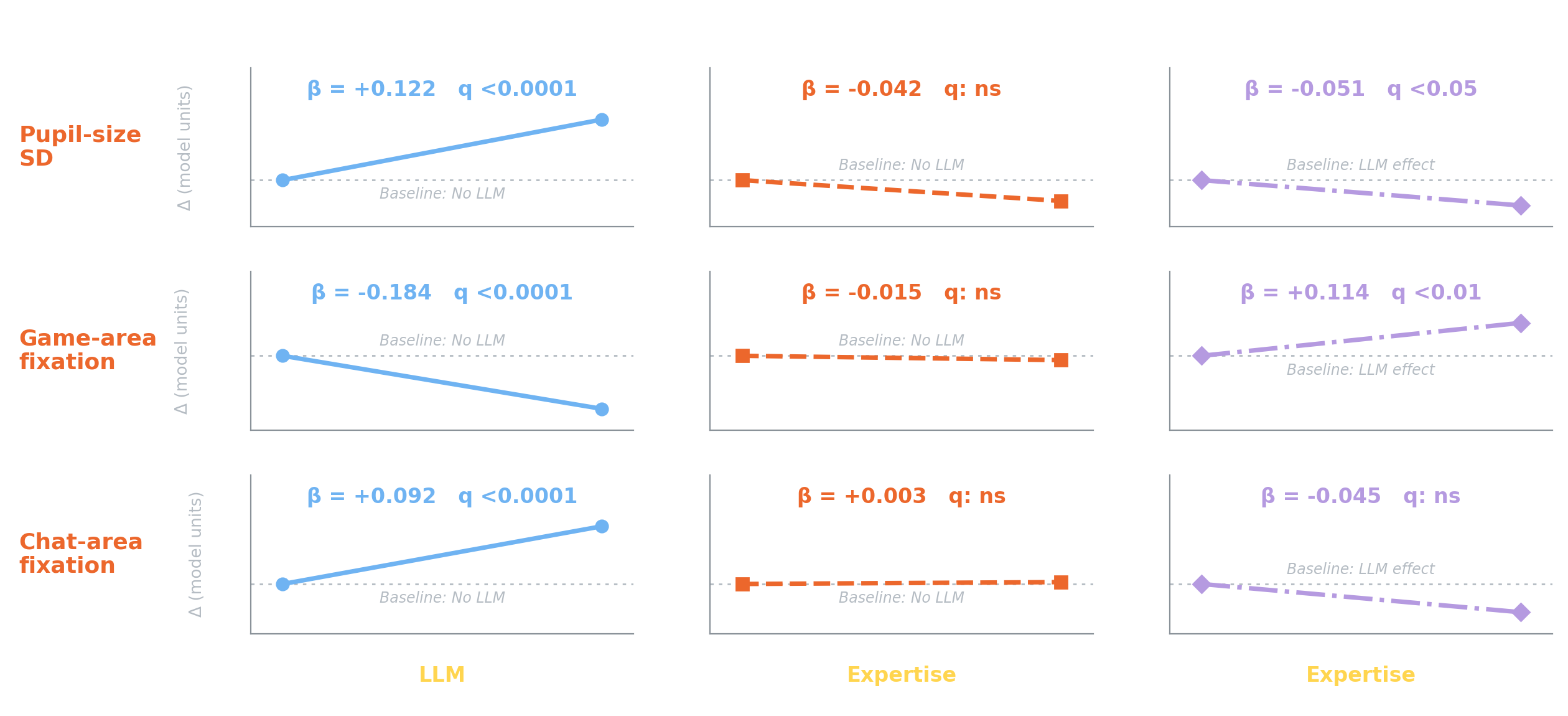
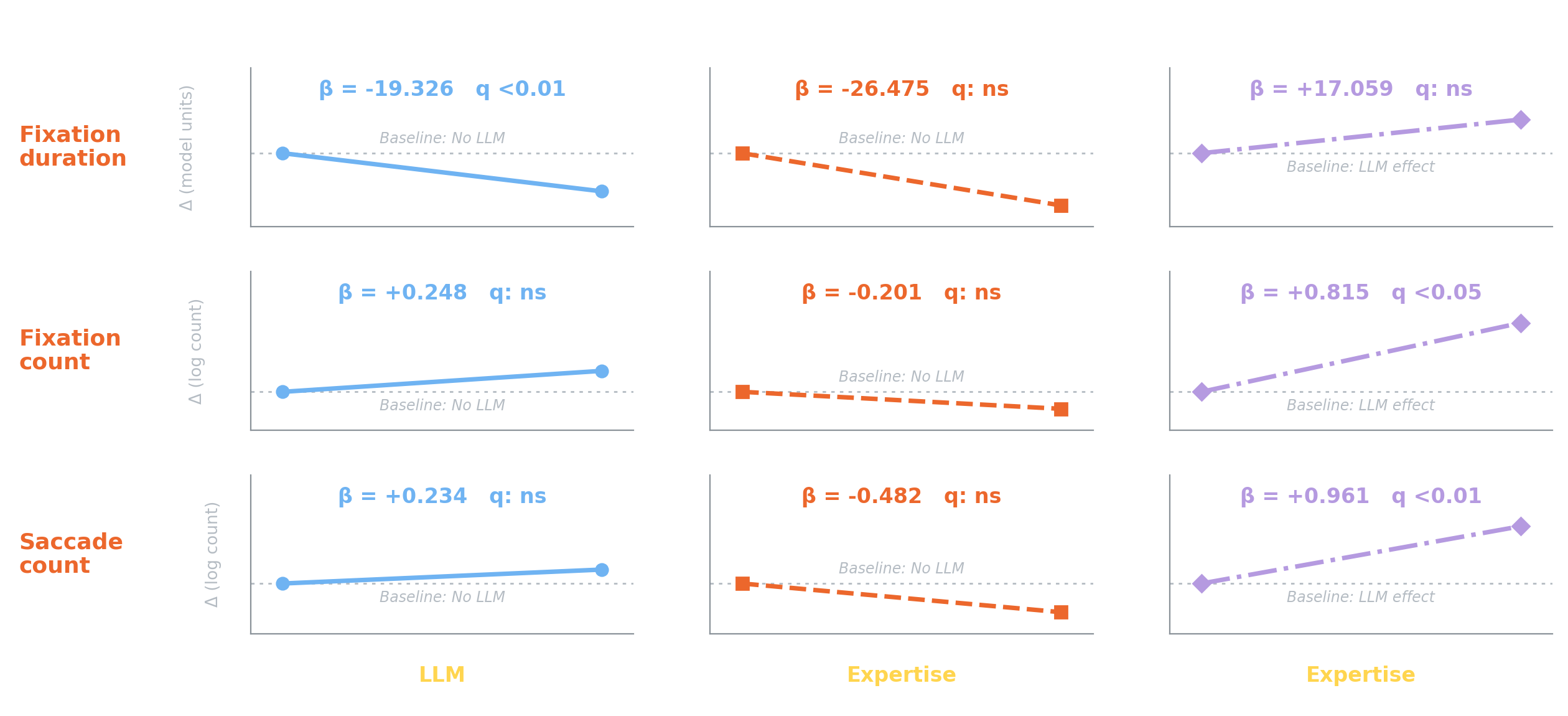
- Attention: How does guidance change visual attention and eye-tracking metrics?
- Expertise: Does expertise moderate these effects?
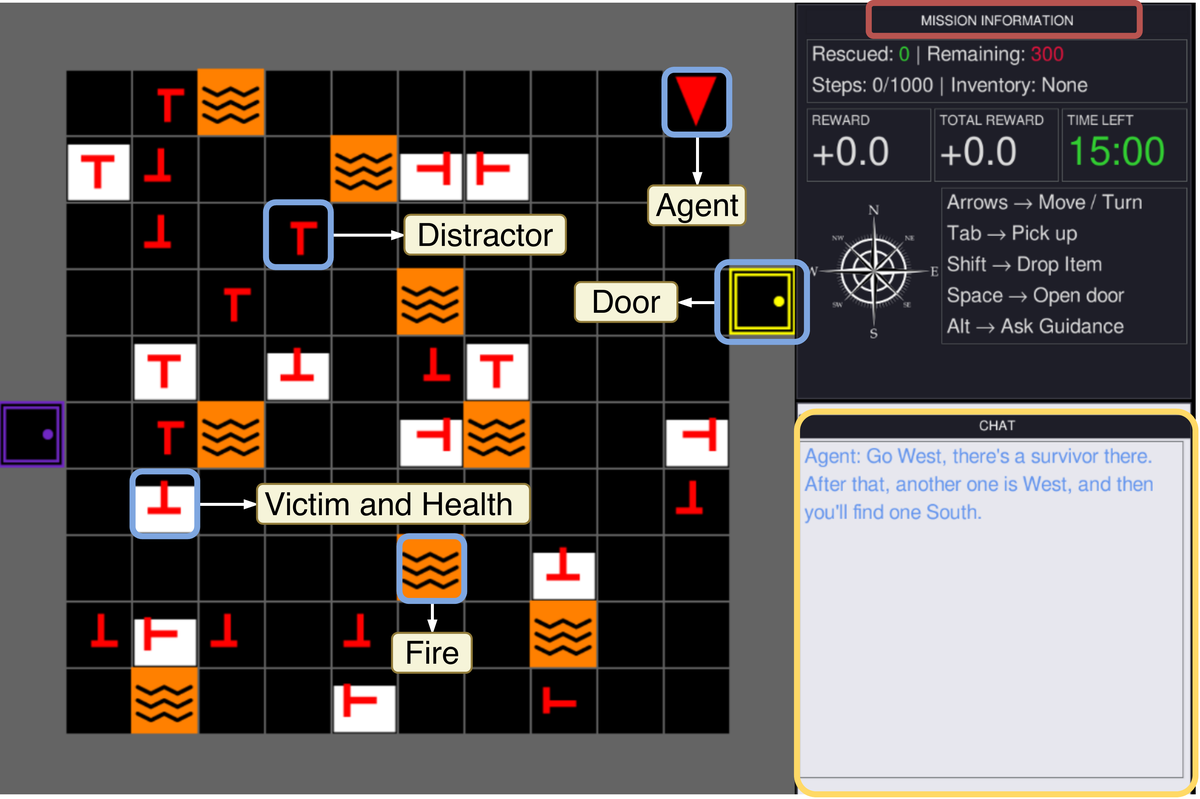
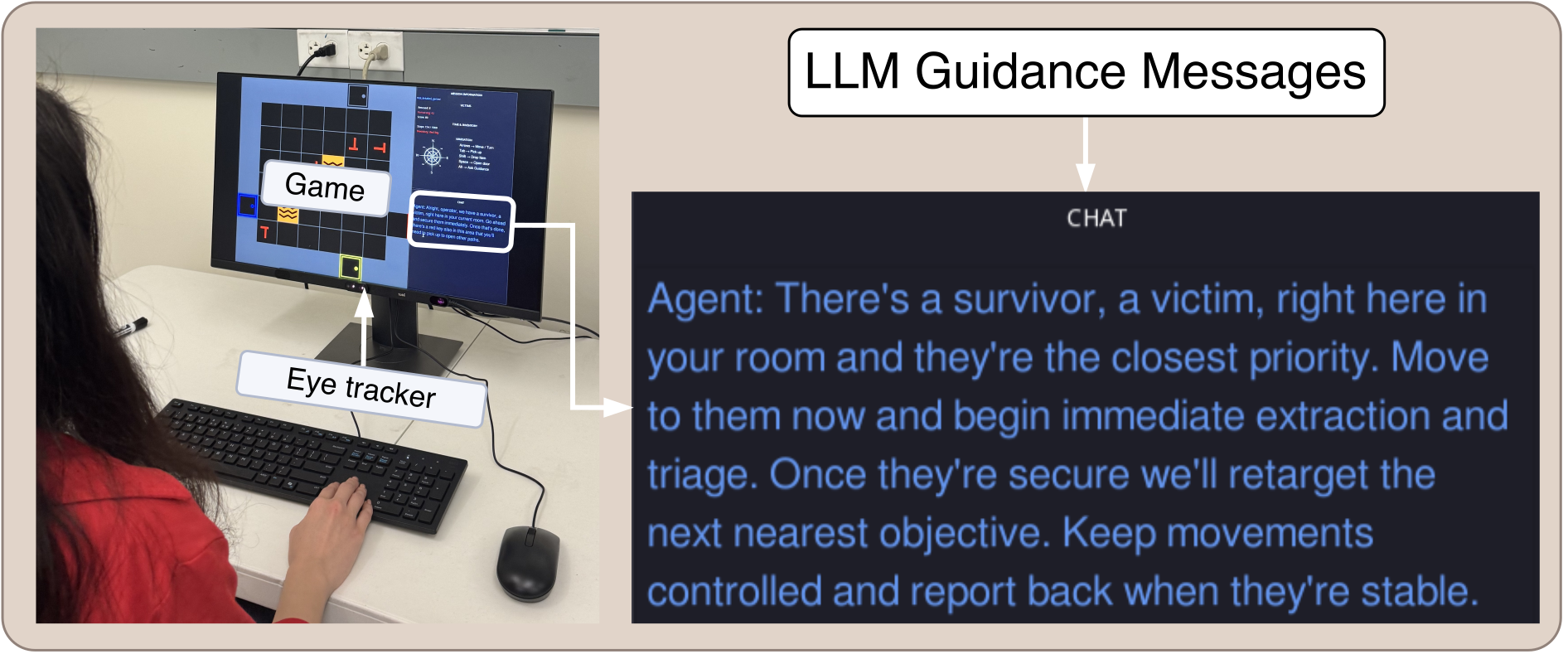
- Testbed: A controlled simulation supports repeatable human–AI teaming research.
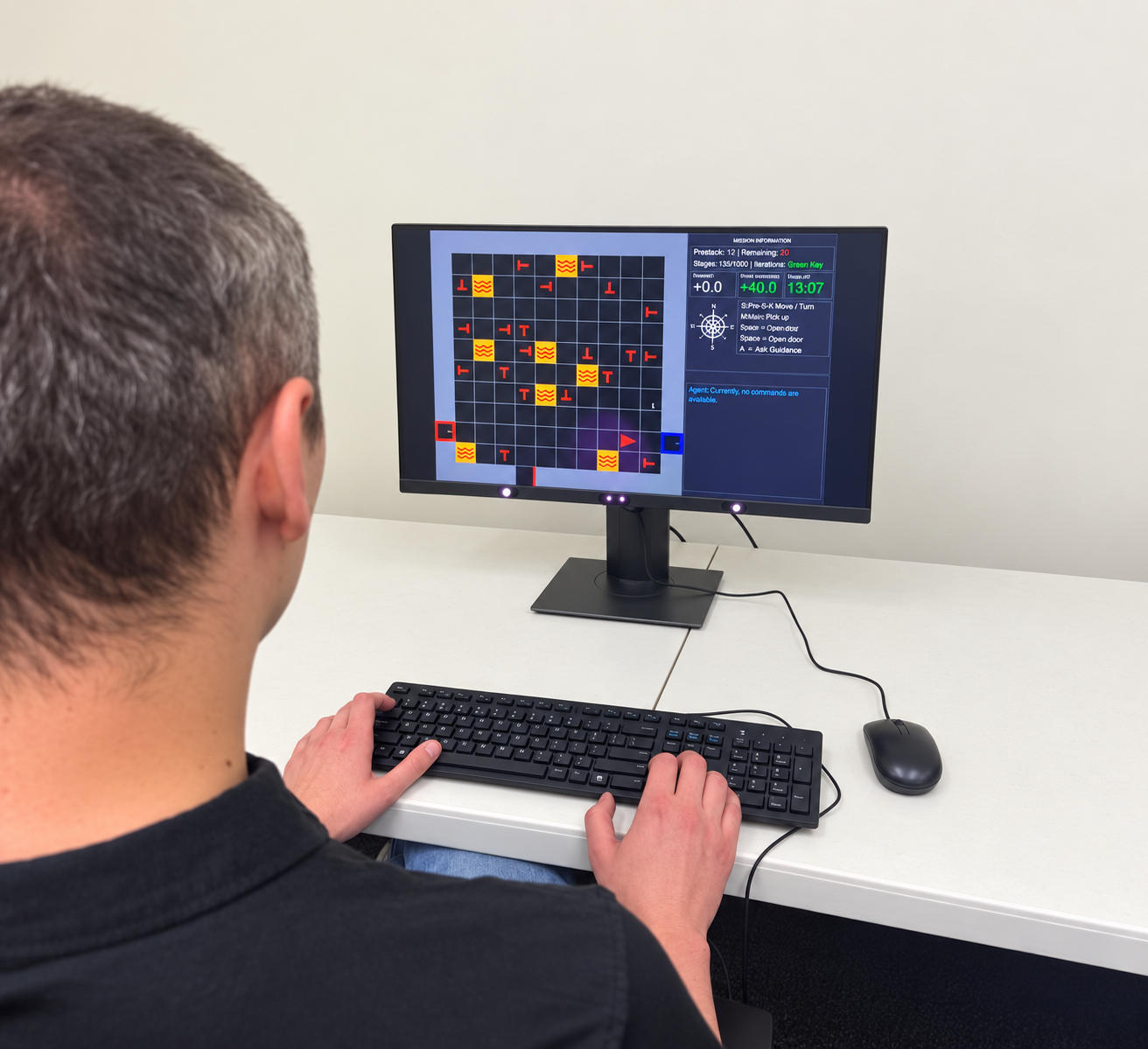
We study how humans process and respond to information from LLMs, using eye tracking to inform future adaptive LLM-based assistance.
Study Design In Brief
13 Participants
3 Trials each (randomized)
2 + 1 LLM + baseline
15 min or 1,000 moves
Task: rescue victims efficiently in a partially observable grid while victim health deteriorates.
ALT requests advice and reveals victim health for 5 seconds.
Expertise Level
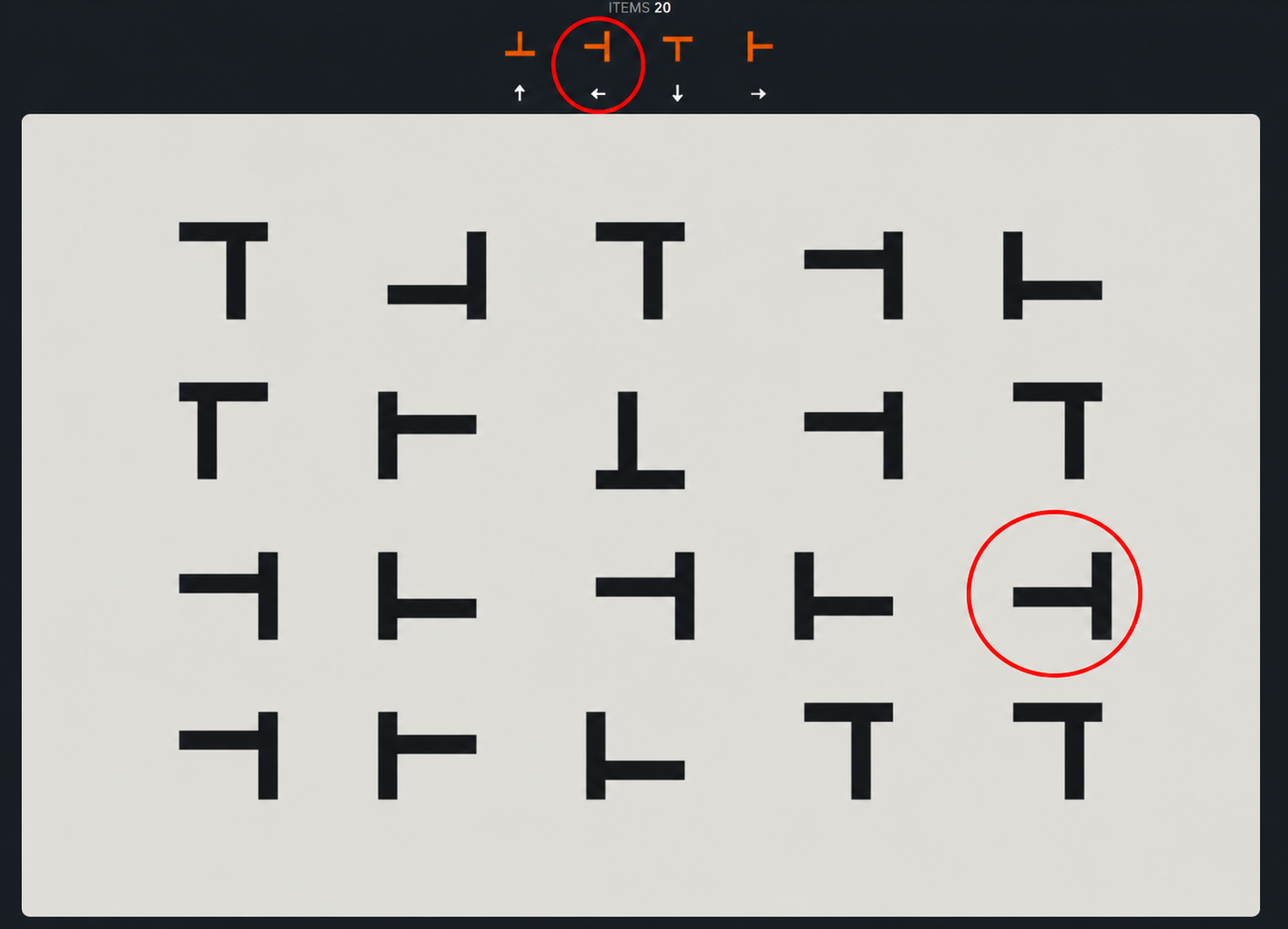
- Expertise labeling: K-means clustering (K = 2) grouped participants into expert vs. novice 2
Data Collection and Analysis
- Synchronized data streams via LSL (Lab Streaming Layer)
- Gaze and pupil data recorded with a Tobii eye tracker
Mixed-effects model: outcome = LLM condition + LLM × expertise + expertise + participant random intercept.
Results

Thank you
Questions?